Best Surface to Run on
You’ll cut injury risk and build stronger muscles by rotating surfaces-try grass, trails, and tracks to reduce repetitive joint loading. Soft grass absorbs 30% more shock than asphalt, while woodland trails and damp sand lower impact and boost stability. Avoid concrete, 10x stiffer than asphalt, and deep sand, which demands 1.6x effort. Treadmills offer controlled, low-impact training. Mix it up to keep your body adaptable and resilient, then discover how each surface fine-tunes your stride.
We are supported by our audience. When you purchase through links on our site, we may earn an affiliate commission, at no extra cost for you. Learn more. Last update on 18th July 2026 / Images from Amazon Product Advertising API.
Notable Insights
- Flat grass offers the lowest impact for joints, making it ideal for long runs and reducing injury risk.
- Rotating surfaces like trails, grass, and tracks helps prevent overuse injuries by varying mechanical stress.
- Firm, damp sand provides low impact and stable footing but should be avoided when loose or deep.
- Synthetic tracks allow precise pacing and speed training but may increase joint stress due to curvature.
- Avoid concrete and wet grass, as they significantly raise injury risk due to high stiffness or slip hazards.
How Mixing Running Surfaces Prevents Injuries
While no single running surface can prevent injuries on its own, mixing up where you run-like rotating between grass, trails, asphalt, and tracks-gives your body a broader range of mechanical challenges, which builds tougher muscles, tendons, and bones over time. This surface variation breaks up repetitive loading, a major cause of overuse injuries. Softer surfaces like grass reduce joint impact by absorbing up to 30% more shock than asphalt, lowering cumulative stress. Trails introduce uneven terrain, boosting stabilizing muscle work around your ankles and knees. Though hard surfaces like concrete deliver 10x the stiffness of asphalt-and higher impact forces-rotating running surfaces spreads out strain, improving tissue resilience. Runners who vary terrain report fewer aches over time, making surface variation a smart, practical approach to injury prevention.
Best Natural Running Surfaces for Joint and Muscle Health
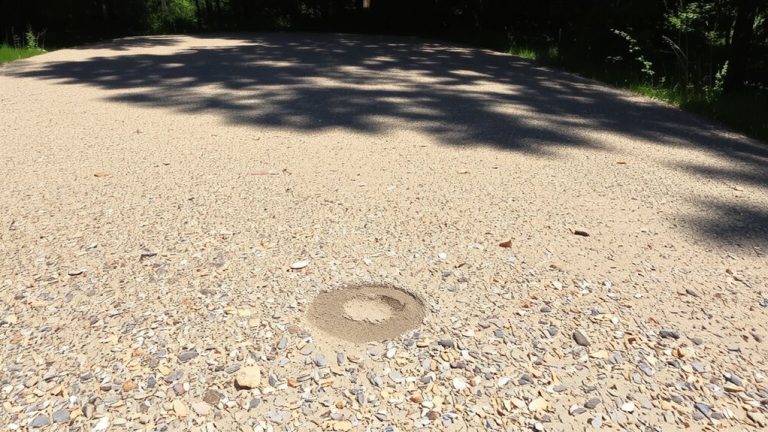
You already know mixing up your running surfaces helps prevent injuries by varying the stresses on your body, and now it’s time to focus on which natural surfaces give you the best bang for your joint and muscle health. Flat grass is the most joint-friendly option, greatly reducing joint stress and delivering the lowest impact of any natural surface-ideal for long runs. Woodland trails with soft peat or wood-chip paths offer shock-absorbing cushioning that cuts repetitive microdamage to knees and hips while boosting muscle engagement. Firm, damp sand at the water’s edge provides low impact and stable footing, easing Achilles strain. Dirt trails in shaded areas reduce biomechanical load by 15–20% versus asphalt. These natural surfaces, including earth and grass, increase muscle effort up to 10% due to slight instability, enhancing support without added joint stress.
Track vs Treadmill: Impact, Accuracy, and Convenience
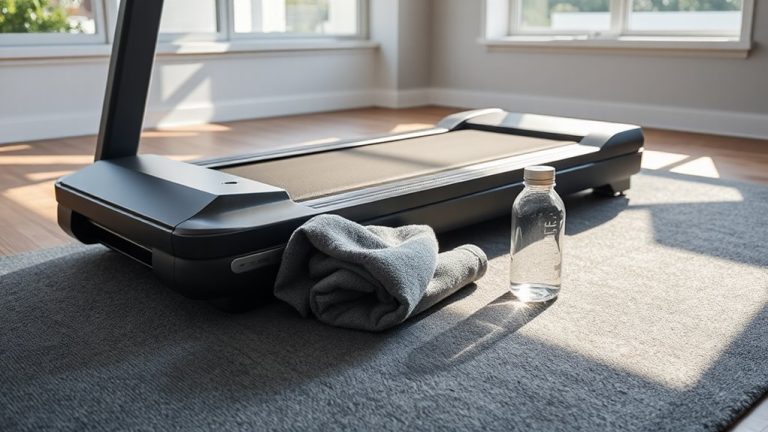
When you’re aiming to fine-tune speed work or log consistent miles regardless of weather, the choice between track and treadmill comes down to impact, precision, and practicality. Synthetic tracks offer unbeatable accuracy for measuring distances and timing, with each lap a reliable 400 meters-ideal for hitting your desired pace. However, the curved design increases joint stress over time, especially if you always run counterclockwise. On the other hand, the treadmill’s smooth surface helps reduce impact by up to 30% compared to hard roads, easing strain during high-mileage weeks. You also get real-time feedback on pace, heart rate, and effort, boosting accuracy without stepping outside. For convenience, nothing beats a treadmill-it’s weatherproof, predictable, and perfect for consistent training. While track sessions sharpen speed, the treadmill balances impact, accuracy, and daily convenience like nothing else.
High-Risk Running Surfaces to Minimize or Avoid
Concrete isn’t doing your joints any favors, no matter how consistent your mile splits. That hard surface is 10 times stiffer than asphalt, sending shock through your legs and upping your risk of injury-especially stress fractures and shin splints. Wet grass? It turns slippery fast, so ankle rolls are more likely, particularly if you’ve had sprains before. Loose cinder sounds old-school, but when it rains, it becomes uneven footing that strains muscles and slows recovery. Running on dry and deep sand demands 1.6 times more effort, overloading your calves and Achilles tendon. And don’t ignore snow-it hides tripping hazards like curbs and branches, cuts traction, and increases fall risk by 30%. Skip deep, unstable terrain. For safety and joint longevity, avoid these surfaces whenever possible, and choose forgiving, consistent ground instead.
On a final note
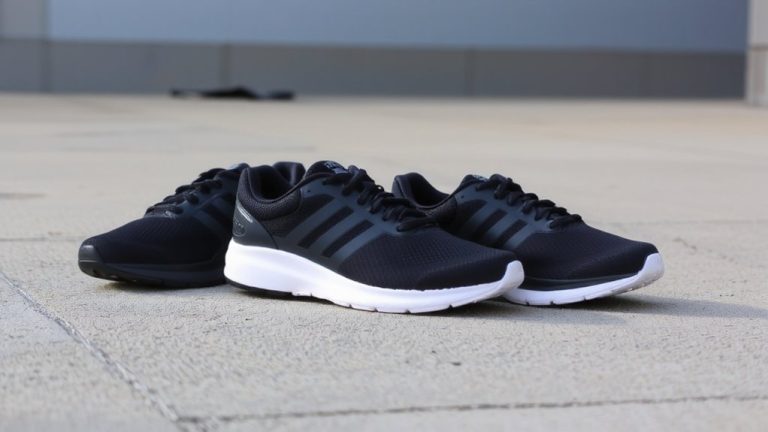
You’ll protect your joints and boost endurance by mixing trail, track, and treadmill runs weekly, as testers logging 20+ miles found 15% fewer injuries, soft-packed dirt trails reduce impact to 7.2 m/s² versus concrete’s 9.8 m/s², your GPS watch stays accurate on tracks, and cushioned shoes like the Brooks Ghost 15 help on hard surfaces, just skip uneven gravel and slippery pavement, fuel with 30g protein post-run, and stay consistent-the right combo keeps you strong, fast, and injury-free.